GROWING PERENNIALS IN ZONE 6 OF NEW YORK STATE ... RAISING BUTTERFLIES ... COMMUNITY GARDENING
Wednesday, July 10, 2019
Red Raspberries
We're off to a good start with our red raspberries this year. Unfortunately, there are lots of Japanese Beetles that have also found their way to the berry bushes. The beetles seem to like both berries and leaves. They're also working on our grape leaves and roses : (
Since we don't use pesticides in the garden or lawn, we have to pick off the beetles individually as we see them.
Tuesday, July 9, 2019
Perennial Path Blooms
A walk this morning around and through the perennial path provided me with a variety of blooms to photo.
| Shasta Daisies and Daylilies with Foxglove in background |
| St. John's Wart |
| Astilbe peeking out of the ferns |
| Bee Balm |
| Daylilies |
| More Daylilies |
| Phlox just beginning to flower |
| Astilbe |
| Clematis climbing the shepherd's hook that holds the oriole feeder |
![]() |
| This is the first year our yucca plant has had a flower stalk |
Monday, July 1, 2019
Butterfly Habitat
Today we set up the Butterfly Habitat. Because we protect our blueberry bushes with a net structure to keep the birds from stealing our crop, I thought it would also make a perfect habitat for the butterflies that I raise -- dual purpose.
The purpose of the habitat is to provide a protected area, somewhat free from preditors, to allow more butterflies to survive than the normal survival rate. Our yard is loaded with milkweed for monarchs, dill weed, fennel and parsley for black swallowtails, and rue for giant swallowtails.
After raising the monarch caterpillars on milkweed indoors in a 2 foot by 3 foot cage, they form their chrysalis on the inside top of the cage. I transferred the cage full of chrysalises to the 4 foot by 8 foot by 6 foot high blueberry cage outdoors. One of the female monarchs emerged this morning, which you can see inside.
I've provided blooming flowers and sugar water nectar for her. There's also milkweed blooming inside the cage among the blueberry bushes. I'll keep the female in the cage only until a male monarch emerges from his chrysalis, mates with her, and she lays eggs on the milkweed plants. I'll release the remaining monarchs as they emerge.
Last year was my first attempt at raising a second generation and it worked -- I was able to raise three adults from the eggs laid by the female.
| Blueberry structure made into a butterfly habitat |
| Our first arrival and cage containing 29 more chrysalises |
| A female monarch was the first to emerge |
| Some of the other residents of the 2' by 3' cage |
| Nectar and flowers for food |
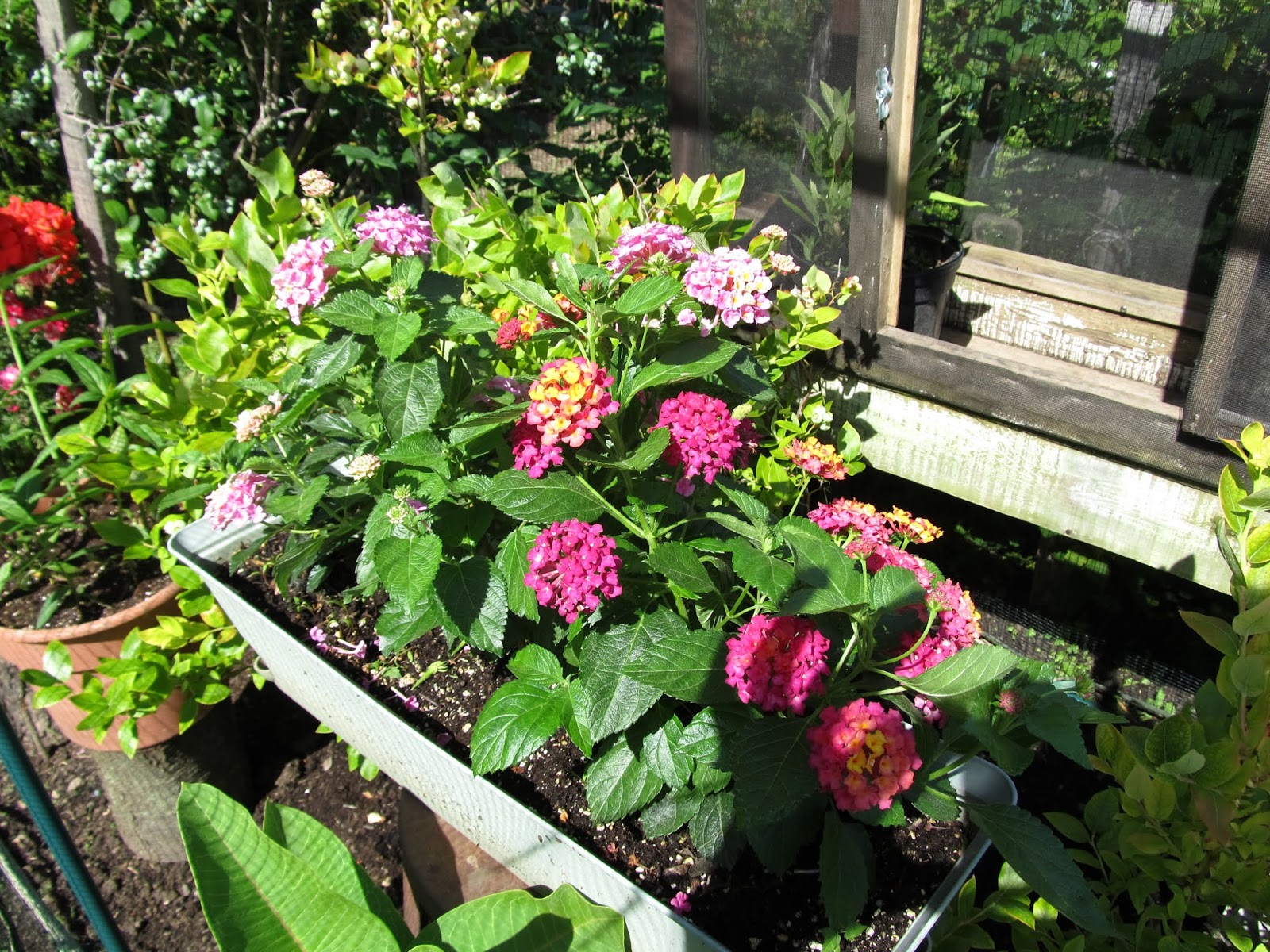
| Lantana -- a favorite of mine and the butterflies! |
| Common Milkweed inside cage beginning to bloom |
| Tropical Milkweed in pot on right, nectar in center yellow container, flowers in left pot |
Tuesday, June 11, 2019
Giant Swallowtail June Update & Monarch Sighting
Today I'm happy to report that, so far, three of the seven Giant Swallowtail chrysalises that wintered over in the cage have eclosed -- June 8th, June 9th and 10th -- one each day! I released them from the cage and they were strong enough to soar into the trees.
Last August I had gathered the eggs off my rue plants and raised the resulting caterpillars in a cage. They formed their chrysalis in the cage (the last one formed 9/10/18) which I left outdoors on our covered porch all winter long with temps going into the single digits at times.
Also today I spotted our first monarch butterfly of the season. She was laying eggs on the milkweed in our yard -- here's a good shot of her on the milkweed depositing an egg.
Monday, May 20, 2019
2019 Spring Garden Update
![]() |
| Ruby Throated Hummingbird on Rhody 5/20/19 |
![]() |
| Ruby Throated Hummingbird at our new feeder 5/20/19 |
| Daffodils |
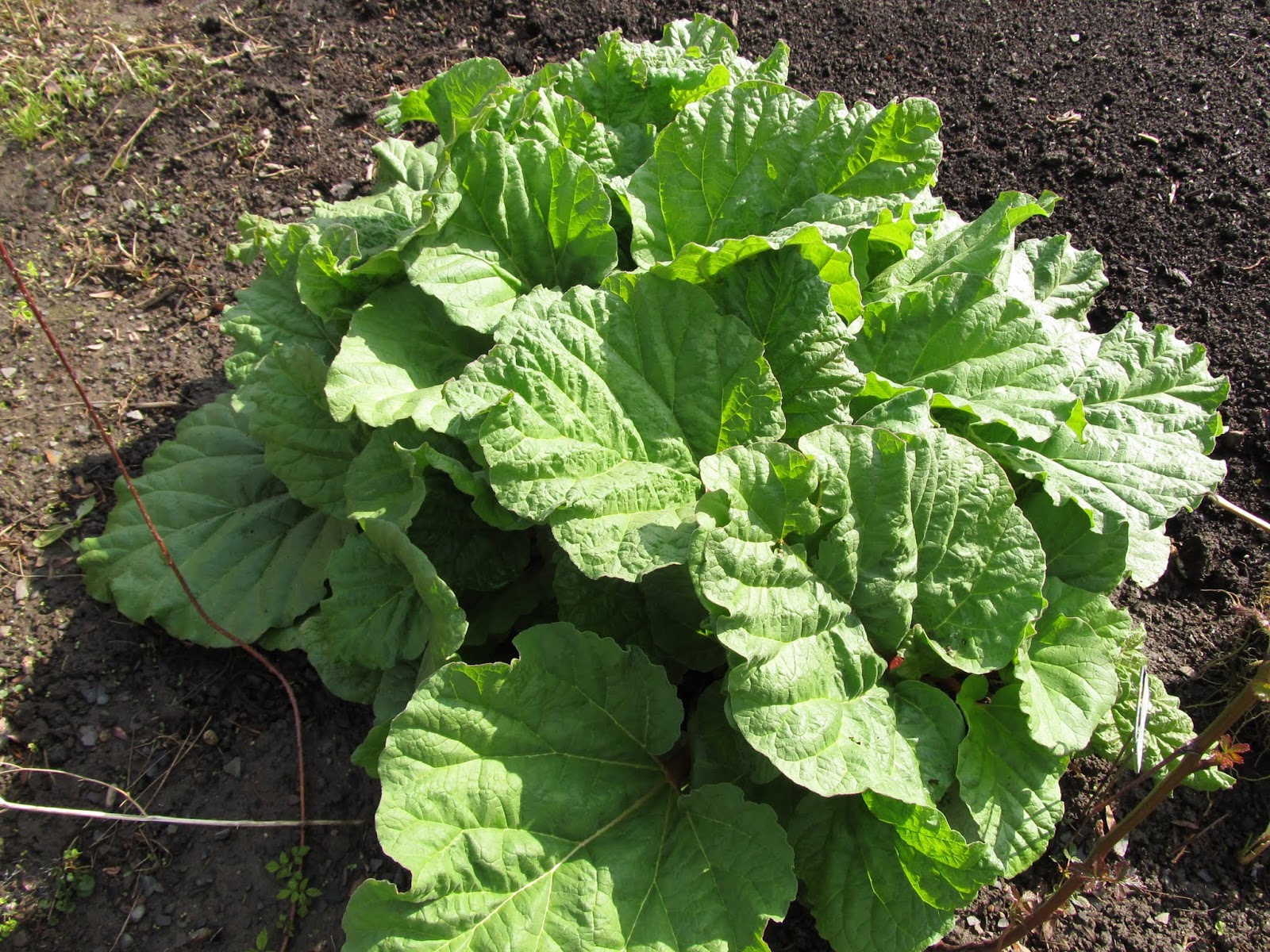
| Rhubarb |
![]() |
| Baltimore Oriole visitor 5/6/19 -- Feeder went up on 4/29/19 |
| Primrose |
| Red Raspberry patch 5/1/19 |
| Garden Center purchases May 1st -- Pansies and Iris |
![]() |
| It's not very often that we'll see a hummingbird perching 5/20/19 |
Saturday, September 15, 2018
Monday, August 6, 2018
Giant Swallowtail Butterfly Eggs (with updates)
A Giant Swallowtail Butterfly (Papilio Cresphontes) has been visiting our garden recently and deposited eggs on our Rue plant (Ruta Graveolens), a host plant for the giant swallowtail. I'm hoping to raise them indoors, away from preditors, so I snipped the branches with eggs attached and placed the stems in a vase with water to keep them fresh.
Update: August 7th
![]() |
The first cat emerged from its egg today. The shell will be its first meal.
Update: August 26
Seven caterpillars have been growing in my cage and the largest has reached the size of 2 inches long! I keep replenishing their supply of rue, since they're big eaters!
Update: September 10
The last of my seven giant swallowtails has formed its chrysalis. The photo shows two in the foreground and two monarch chrysalises in the background of the cage.
I think the giant swallowtails will winter over and eclose sometime in May of next year. The monarchs will eclose in a couple days and head for Mexico for the winter.
The post below from July 23rd of this year shows the Giant Swallowtail that visited my garden and laid the eggs that resulted in the above chrysalises.
Monday, July 23, 2018
Giant Swallowtail Butterfly
A highlight of the summer was today's visit by a Giant Swallowtail, rarely seen in our area. Its wingspan measured 5-6 inches. A female laid 7 eggs on our rue plant which I'm raising indoors. In 2011 I successfully raised three to adult stage and then released.
Wednesday, June 20, 2018
Vegetable & Berry Garden Update
For me, today is a perfect day to garden. It's 68 degrees and cloudy. Yesterday it rained, so the weeds are easy to pull! : )
Since we compost our kitchen scraps and use the compost in the garden, many tomato, eggplant and pepper seeds have sprouted in the garden. Also, seeds from dill and fennel pop up everywhere. I use the tiny seedlings to replace early crops as we use them. The dill is used for pickles. Swallowtail butterflies lay their eggs on dill and fennel and the caterpillars feed on those plants.
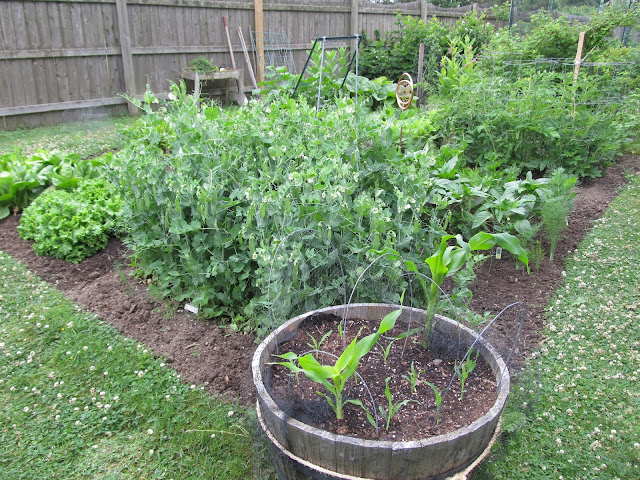
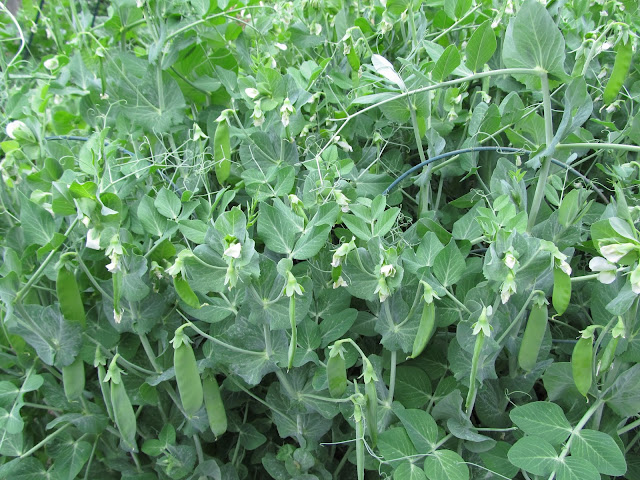
| The pea pods are forming. Peas were seeded April 30th. They should be ready to eat in about a week. |
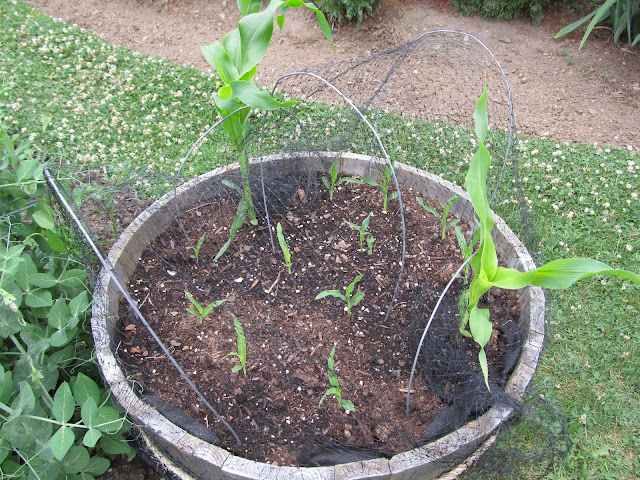
| Two corn plants from the first seeding, little sprouts from second seeding. |
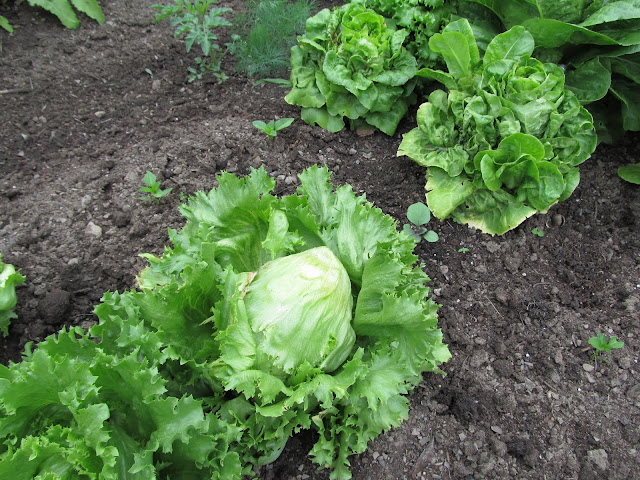
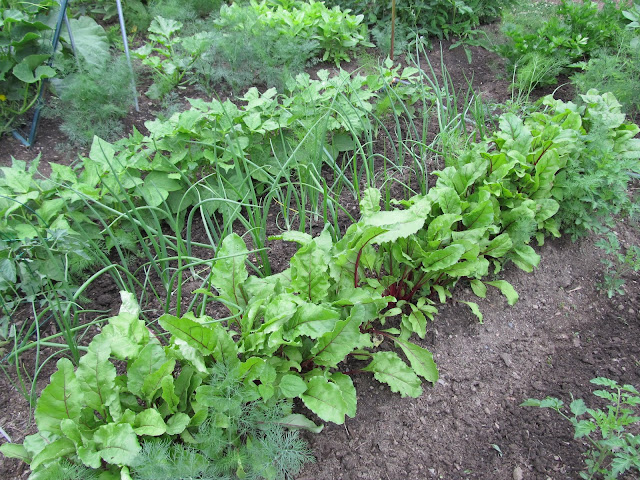
| Beets in foreground seeded May 6th; Spanish and Red onions in center; Yellow beans in back row seeded May 14th. Dill, fennel and tomato plants pop up here and there from the compost in the garden. |
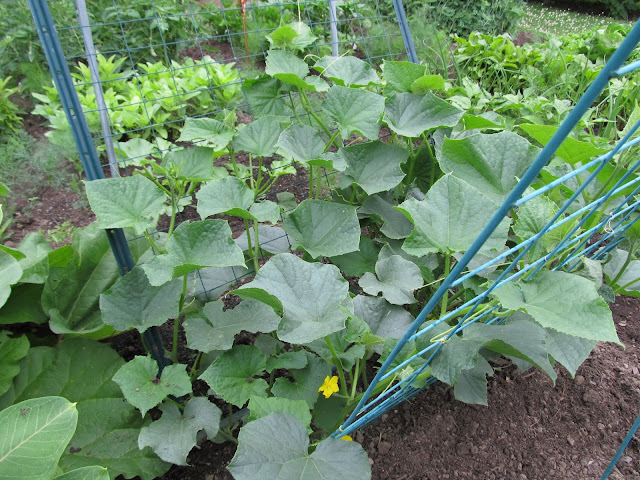
| Burpee Hybrid II cucumbers climbing between two trellises, seeded May 14th and just beginning to flower. |
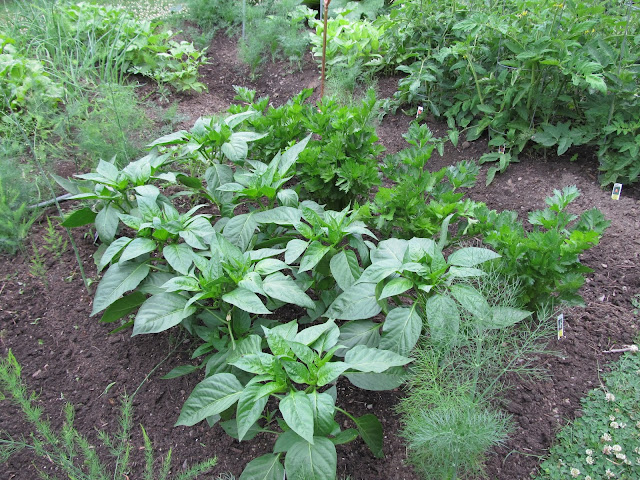
| Green bell peppers in foreground planted May 24th and just starting to form flowers; Celery in next row planted May 6th. |
| These are the San Marzano plum tomatoes set in as plants on May 24th and starting to form fruit. |
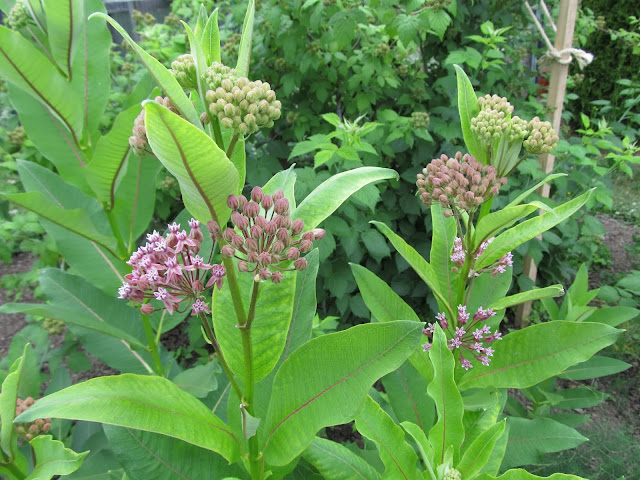
| I'm letting a few common milkweed plants grow wild in the garden to attract monarch butterflies that will lay their eggs on the leaves. The caterpillars will then feed on the leaves. |
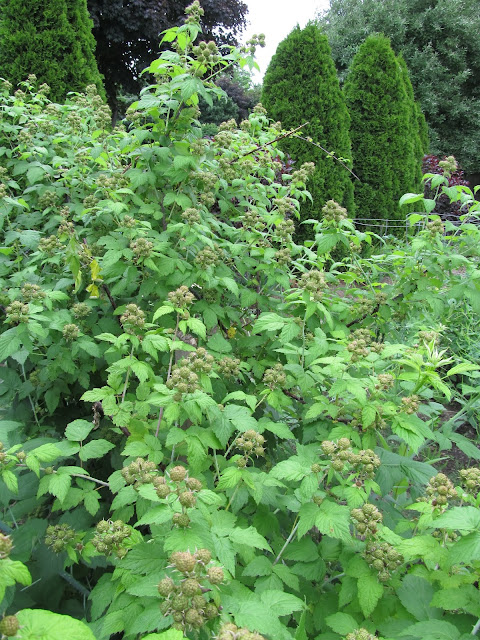
| Black Raspberry bushes full of berries that should ripen in about a week. |
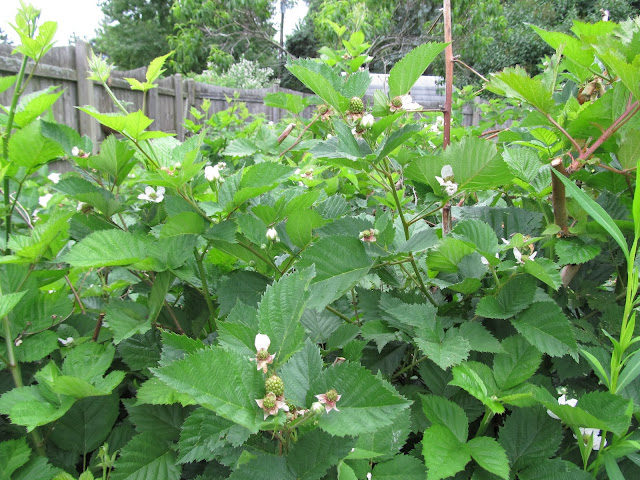
| Thornless blackberries flowering and forming fruit. |
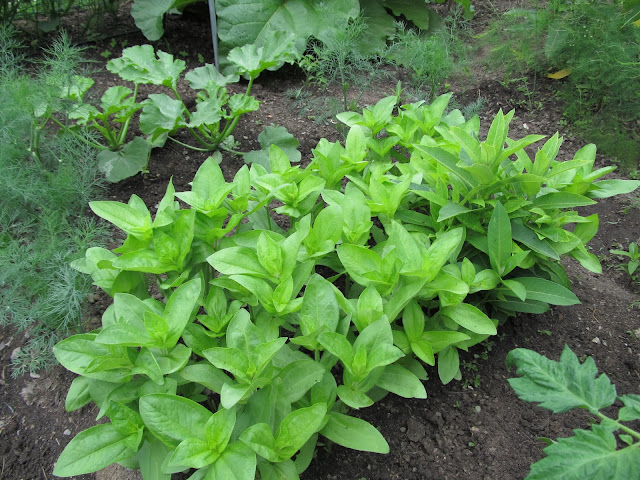
| Zinnias planted from seed on May 24th. |
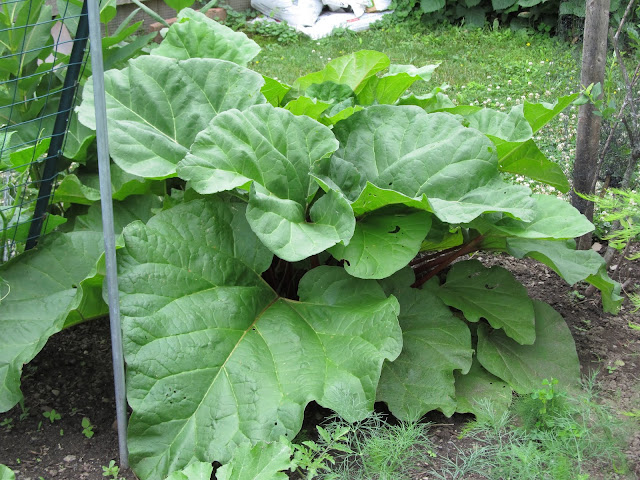
| Rhubarb |
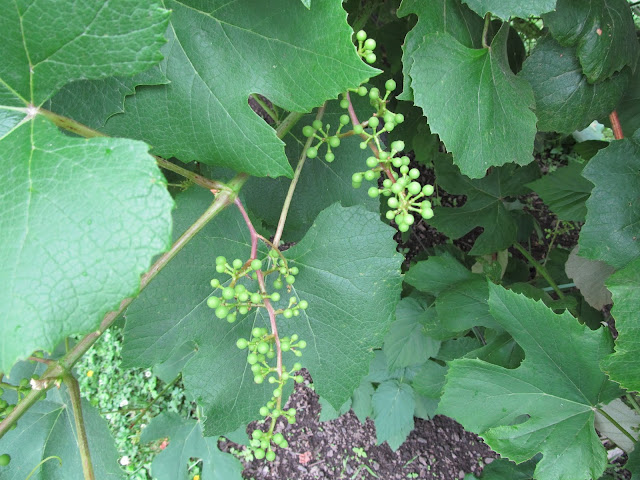
| Concord grape clusters |
Subscribe to:
Comments (Atom)